Why Your Gynaecologist May Recommend Minimally Invasive Surgery
Advances in surgical techniques have changed the way many gynaecological procedures are performed. Large abdominal cuts are no longer the only option for conditions such as endometriosis, ovarian cysts, fibroids, abnormal uterine bleeding and benign hysterectomy.
Understanding what minimally invasive surgery involves and the reasons it may be recommended can help you feel more informed when discussing your treatment options.
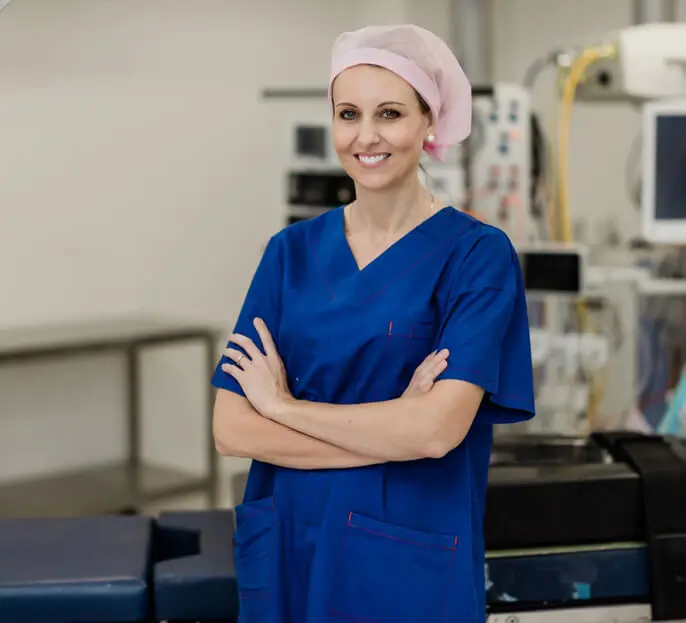
Dr Kelly Hankins is a gynaecologist and obstetrician with over 15 years’ experience in women’s health. Consultations are available for women on the Central Coast looking for an esteemed and understanding specialist in North Gosford.
What is minimally invasive surgery?
Minimally invasive gynaecological surgery uses small incisions, or even no external incision with hysteroscopy, instead of one large abdominal incision. These techniques include:
Laparoscopic surgery
Uses a small camera and fine instruments placed through tiny cuts in the abdomen.
Robotic-assisted laparoscopic surgery
Is the same technique as laparoscopic surgery, but with the use of a robotic system that can increase visibility and precision.
Hysteroscopic procedures
This method is performed through the vagina and cervix to view the inside of the uterus. It can be used to investigate or treat concerns such as polyps, fibroids inside the uterus or abnormal bleeding.
What conditions is it considered for?
Minimally invasive techniques may be considered for:
· Endometriosis
· Fibroids
· Ovarian cysts
· Abnormal uterine bleeding
· Endometrial polyps
· Pelvic adhesions or pelvic organ prolapse
· Benign hysterectomy
Not all conditions or patients are suitable for minimally invasive surgery. The most suitable technique is based on clinical findings, medical history and individual needs.
Potential benefits of minimally invasive
The difference in technique and the potential benefits of minimally invasive procedures translate into real life. Compared to with open abdominal surgery this could mean less time in hospital so you can recover in the comfort of your own home, as well as a quicker recovery making it easier to plan around work, children, study, caring duties and routines.
If your gynaecologist has recommended minimally invasive surgery, it may also offer multiple potential benefits compared to open surgery.
Recovery from minimally invasive surgery
Early recovery from minimally invasive gynaecological surgery is faster than open surgery, but it is still surgery. Recovery can also differ depending on the individual’s condition, procedure, general health and lifestyle.
Patients can still experience cramping, bloating, shoulder tip pain, fatigue or tenderness after surgery, especially in the first few days. Our team will provide clear instructions about pain relief, movement, wound care and signs that need medical review.
Post-Operative Tip: Prior to surgery and as soon as you are cleared to after surgery, try to gently move and walk around to improve circulation and encourage gas absorption. Frequently change positions too, alternating between standing, sitting upright and lying down. Avoid lying perfectly flat, as this pushes gas directly against the diaphragm.
Is minimally invasive surgery right for me?
Minimally invasive surgery is not suitable for every patient. Open surgery may be recommended when there are very large fibroids, extensive scarring, complex anatomy, a large mass or concern about cancer.
An operation that begins as laparoscopic surgery may also need to change to open surgery during the procedure if visibility, bleeding, scar tissue or anatomy makes continuing through small cuts unsafe to do so.
Informed choices about surgery
Dr Kelly Hankins will discuss a number of considerations during your consultation, but it is always helpful to ask questions and feel informed when making decisions.
- Why is surgery being recommended?
- Can this be done with keyhole surgery?
- What are the benefits in my case?
- What risks should I understand?
- How long will I need off work?
- When can I drive, exercise and have sex?
Good surgical planning should take into account your symptoms, lifestyle, home support, work demands and fertility plans.
Gynaecology specialist care in North Gosford
Dr Kelly Hankins provides care for women with endometriosis, ovarian cysts, fibroids, pelvic pain, abnormal bleeding and other gynaecological concerns on the Central Coast.
If you are experiencing gynaecological symptoms or have been advised to seek specialist management, ask your GP for a referral to Dr Kelly Hankins in North Gosford to discuss your condition, treatment options and next steps.
BOOK AN APPOINTMENT
References:
Royal Australian and New Zealand College of Obstetricians and Gynaecologists. (Reviewed 2022). Guidelines for performing gynaecological endoscopic procedures. https://ranzcog.edu.au/wp-content/uploads/Guidelines-Performing-Gynaecological-Endoscopic-Procedures.pdf
Better Health Channel. (Updated 2024). Victorian Government. Hysterectomy. https://www.betterhealth.vic.gov.au/health/conditionsandtreatments/hysterectomy
Healthdirect Australia. (Reviewed 2024). Hysteroscopy. https://www.healthdirect.gov.au/hysteroscopy
Royal Australian and New Zealand College of Obstetricians and Gynaecologists. (2025). Laparoscopy Patient Information Pamphlet. https://ranzcog.edu.au/wp-content/uploads/Laparoscopy.pdf
Dr Kelly Hankins (MED0001774024) is a FRANZCOG qualified Specialist in Obstetrics and Gynaecology. This article provides general information only and is not a substitute for professional medical advice. All surgery carries risks and results may vary. Consult with Dr Kelly Hankins to determine a personalised treatment plan and support an informed decision-making process.